
Social Security Disability Advocates:
From Application to Approval


Nationwide Disability Advocacy You Can Trust
Social Security Disability Advocates: From Application to Approval We work throughout the country as a highly trained team, advocating for individuals applying for Social Security Disability Insurance (SSDI) and Supplemental Security Income (SSI) benefits. From our base in North Carolina, we handle claims in all 50 states, from the initial application through the Appeals Council review. There's no upfront cost. We only get paid if you win your benefits, and our fee is regulated by the Social Security Administration.
Get your free case review: (888) 251-5551. We only get paid when you win, and the SSA caps our fee at $9,200.
How Our Disability
Advocates Help You
Our representatives handle your SSDI or SSI claim from the first piece of paperwork through your Administrative Law Judge (ALJ) hearing if your claim gets denied. Our disability advocates focus exclusively on Social Security Disability claims. All we do is work on these cases. We prepare all the forms, present the required medical evidence, and follow the proper procedural steps.
What does a Social Security Disability Advocate do?
A Social Security disability advocate handles your SSD claim from end to end. We prepare and file your initial application, gather medical evidence, and communicate with the SSA on your behalf. We also represent you at your ALJ hearing if your claim reaches that stage.
A disability advocate is your point person. They manage all contact between you and the government system that could otherwise require you to visit field offices, state Disability Determination Services (DDS) examiners, and hearing offices.
Here's what that looks like in practice:

Filing the initial application you sign, including the SSA-3368 Adult Disability Report and either the SSA-16 for SSDI or the SSA-8000-BK for SSI

Collecting medical records using SSA-827 authorizations and following up with treating providers when records come in incomplete

Communicating with SSA field offices and disability examiners during the review period

Filing your Social Security Disability appeal within the 60-day deadline if your claim is denied at the initial or reconsideration level

Preparing you for your SSDI hearing with practice testifying and a review of the medical and vocational evidence

Representing you at the hearing itself, examining the vocational and medical experts, and submitting written arguments

Requesting Appeals Council review when a hearing outcome is unfavorable and the record supports it

Can a non‑attorney representative handle my disability case?

"Yes. The SSA authorizes both attorneys and non-attorney representatives to handle disability claims at every administrative level, from the first step preparing your application through to the end of the Appeals Council review. Both attorneys and non-attorney disability advocates are held to the same SSA's rules of conduct, and both are paid under the same SSA fee structure.
The only place the two differ is federal court. If your claim is denied at the Appeals Council, and you decide to file a civil claim in federal court, only a licensed attorney is authorized to represent you at that stage. When a Clauson Disability client reaches that point, we refer you to an experienced licensed attorney who handles federal disability appeals, and we make sure the handoff happens without a gap in representation."
Sean – Representative
Who Qualifies for Our Advocacy Services
If your physical or mental impairment has kept you from working regularly for 12 months, or you expect the condition to continue for that long, or result in death, you might have an SSDI or SSI claim worth pursuing.
The two programs have different eligibility rules and benefits. While many claimants fit only one program's eligibility requirements, some people may qualify for both. This is referred to as "concurrent benefits."

Who can apply for
SSDI benefits?
Social Security Disability Insurance (SSDI) is for workers who've paid into Social Security through payroll or self-employment taxes, and have earned enough work credits to be insured. Your medical condition must meet the SSA's definition of disability, and your disability must have begun before your last day of insurance. SSDI's full eligibility details are on our SSDI overview page.

Who can apply
for SSI benefits?
SSI is different from SSDI. SSI is a need-based program for disabled people with limited income and few financial resources. Work credits are not required for SSI benefits. You can find out about SSI's rules, including the income and resource limits on our SSI overview page.

Not sure which
program you qualify for?
You're not alone. The SSDI and SSI rules overlap in some places and diverge in others. Many claimants may qualify for concurrent benefits under both programs. Our SSDI vs. SSI comparison walks you through the differences side by side, and our free case review is built to answer this exact question. call (888) 251-5551 or request your review online.
Your Path to Reviewed Disability Benefits
Our process has five stages. At each stage, your advocate handles the procedural work, so you can focus on your health and your medical treatment.
-
1
Free Case Review
We evaluate your situation at no cost. Our team reviews your work history, your medical conditions, and where you are in the SSA process, then tells you honestly whether we think we can help.
-
2
Application or Appeal Filing
Once we take your case, we handle the paperwork and submit your claim to the SSA. If you've already been denied, we file your reconsideration request or hearing request within the 60-day deadline.
-
3
Medical Evidence Development
We work with your treating doctors to gather the records, clinical notes, and functional assessments that support your claim. Weak medical evidence is the single most common reason initial applications are denied. Closing those gaps is where a specialized advocate earns their fee.
-
4
Hearing Preparation and Representation
If your case reaches an ALJ hearing, your advocate will prepare you for the judge's questions and the vocational expert's testimony. Then the advocate represents you at the hearing itself.
-
5
Benefits Approval
When your claim is approved, your benefits begin and any back pay is released. Our fee is 25% of your back pay, capped at $9,200, and it's paid directly by the SSA out of your back pay award. If you don't win, you don't pay.


Why Choose a Disability Advocate Over Going Alone
More than 60% of initial disability applications are denied, but claimants who work with a trained representative get approved at higher rates than claimants who file on their own. The SSA process isn't designed to be hard, but it is designed to be thorough. The need for completeness sometimes makes the process more complex than seems necessary. However, the burden of proof sits on the claimant. Having someone with experience whose entire job is to help you meet that burden often changes the outcome.
Research shows claimants benefit from professional representation. A National Bureau of Economic Research study by economists at UC Berkeley found that claimants with professional representation were approved at the initial application stage at rates 23 percent higher than unrepresented claimants.
You are not required to hire anyone on day one. But the earlier you bring in a representative, the sooner the evidence-gathering work begins, and the fewer reversible mistakes end up in your file.
There's no upfront cost to work with a disability advocate. The SSA regulations set all representative fees at 25% of your back pay, capped at $9,200 as of November 30, 2024. The SSA pays the advocate’s fee out of your back pay award, so you never have to write us a check. If your claim isn't approved, you pay nothing.
What is the Difference Between a Disability Advocate and a Disability Attorney?
Both disability advocates and disability attorneys can represent you before the SSA at every administrative level, and both charge the same fee set by the SSA. The key difference is federal court: only a licensed attorney can represent you in federal court if your claim is denied at the last administrative level, the Appeals Council. An advocate or an attorney can represent you at every other stage of your claim, from the application forms to the ALJ hearing to the Appeals Council.
| Disability Advocate | Disability Attorney | ||
|---|---|---|---|
| Can file your application | Yes | Yes | |
| Can represent you at ALJ hearings | Yes | Yes | |
| Can appeal to the Appeals Council | Yes | Yes | |
| Can appeal to federal court | No (refers to licensed attorney) | Yes | |
| Fee structure | 25% of back pay, up to $9,200 | 25% of back pay, up to $9,200 | |
| Focus area | SSD claims exclusively | Often handles multiple practice areas | |
| Availability at application stage | Typically available from day one | Many only take cases after denial |
From Application to Federal Appeal Support
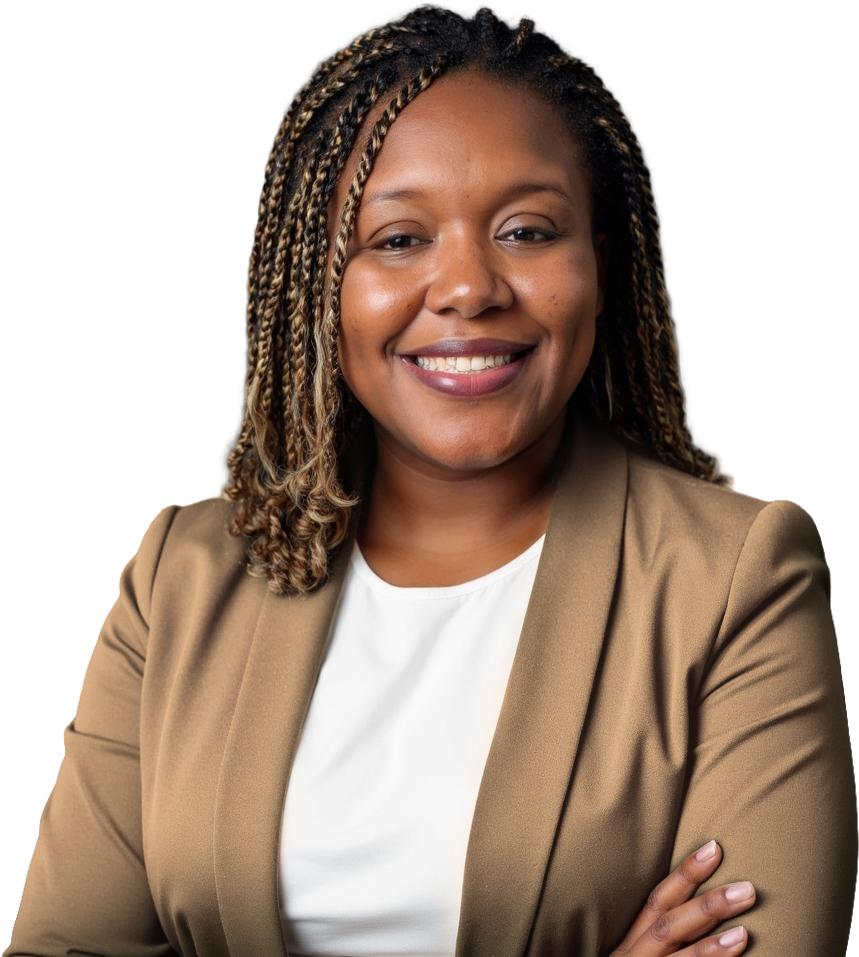
"The great majority of claims are resolved at the administrative level (initial application, reconsideration, ALJ hearing, or Appeals Council). An experienced advocate provides the same high quality of Social Security Disability representation as an attorney, but at the same SSA-regulated fee.
If your case falls into the small percentage of cases that reach federal district court, Clauson Disability maintains relationships with experienced licensed attorneys who handle federal disability appeals. If your case needs that next step, we refer you to one of those attorneys and help make sure the transition is seamless. This is how responsible advocates draw the line between administrative work and federal litigation."
Ari – Senior Representative
What is an EDPNA - qualified disability representative?
An EDPNA (Eligible for Direct Payment Non‑Attorney) is a non‑attorney representative who meets the Social Security Administration's strict qualification standards and is authorized to receive direct payment of approved fees from the SSA for representing disability claimants. It's federally credentialed by the government agency that processes every disability claim in the country.
To qualify for EDPNA status, the SSA requires a representative to:
Hold a bachelor's degree or an equivalent combination of training and work experience
Pass a written examination administered by the SSA covering federal regulations, Social Security Rulings, and disability adjudication procedures
Pass a criminal background check
Maintain professional liability insurance continuously
Complete annual continuing education in SSA-prescribed topics, including the Listings of Impairments, disability programs, and professional ethics
Areas We Serve
Clauson Disability represents clients in all 50 states from our base in Durham, North Carolina. Our representatives work cases across the country because the SSA's disability process is federal. The same rules apply whether your hearing is in Raleigh, Phoenix, or Philadelphia. If you are searching for a Social Security Disability advocate near you, or disability advocates near you in your city or state, our team is available regardless of where you live.

Durham
Raleigh
Charlotte
Greensboro
Fayetteville
About Clauson Disability
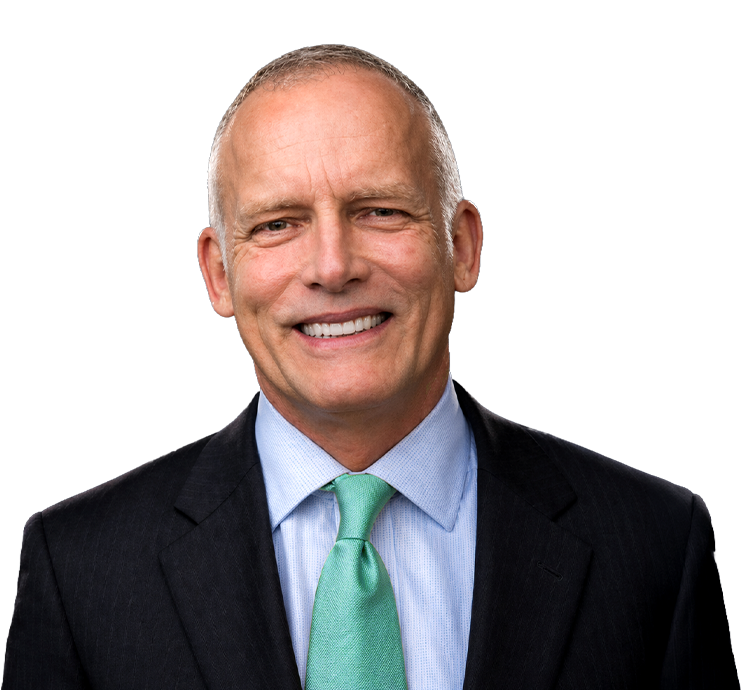
"Clauson Disability was founded by Vaughn Clauson in 2009 as a dedicated advocacy organization for Social Security Disability claimants. Our team members are trained disability representatives whose entire focus is helping individuals apply for and win SSDI and SSI benefits. We don't handle other practice areas. SSD is what we do.
To date, we've helped countless individuals work through the SSA disability process, and our team is continuously credentialed to SSA standards. For the full story and individual representative bios, see our about page."
Vaughn S. Clauson – Representative, Co-Founder
Clients We Helped
They worked very hard to get me approved. They are some sweet people and they really cared and listened to what I had to say. I would highly recommend them. Thank yall so much for helping me.
Great company! Everyone was patience and nice. Clauson's is the only company that help me get on disability. I will like to Thank everyone that was involved in my case. I'm extremely grateful.
They are so great. They really make u feel like u made the right choice to hire them to represent you from the first phone conversation. I have already recommended them to several people.
Frequently Asked Questions About Disability Advocates
A Social Security disability advocate is a trained, non-attorney representative authorized by the SSA to help individuals apply for and win SSDI and SSI benefits. Advocates prepare the application forms, gather medical evidence, communicate with the SSA, and represent clients at ALJ hearings. The work is the same work an attorney performs at the administrative level, and the fee structure is identical. At Clauson Disability we employ attorneys to represent clients at hearings, although we also have skilled executive staff, advocates, and support staff on our team.
Both advocates and attorneys can represent you before the SSA at every administrative level, and both charge the same SSA-regulated fee. The main difference is that only a licensed attorney is authorized to represent you in federal court if your case is denied at the Appeals Council level. Clauson Disability, although a non-attorney advocacy, does have attorneys representing clients at hearings.
There's no upfront cost. Under the SSA’s current rules, advocates are paid 25% of your back pay if your claim is approved, but not more than $9,200 (effective November 30, 2024). If you don't win your benefits, you pay nothing. The fee is paid directly by the SSA from your back pay, not by you out of pocket.
Yes. Non-attorney representatives are authorized by the SSA to represent claimants at hearings before Administrative Law Judges. An experienced advocate will prepare you for testimony, review the medical record, question the vocational and medical experts, and present your case to the judge.
If your claim is denied at the Appeals Council level and requires a federal court appeal, Clauson Disability refers you to a licensed attorney with experience handling federal court disability cases. We coordinate the transition, so your case continues without disruption. Federal court is the only stage of the SSD process where a non-attorney representative is not authorized to appear.
It typically takes six to eight months to get a decision on your initial application, though this can vary depending on your condition and how quickly medical records are obtained. If appeals are needed, the reconsideration stage takes another six to eight months, and the wait for a hearing is about 10 to 18 months (times vary depending on state and SSA workloads). We work directly with your medical providers to avoid unnecessary delays and keep your case moving forward.
The SSA maintains a list of qualifying conditions known as the Blue Book, organized by human body system. Conditions that don't meet a specific listing can still qualify if they limit your ability to work under the SSA's Medical-Vocational Guidelines.
No. Clauson Disability serves clients nationwide. Our team is based in North Carolina, but the SSA's disability process is federal, and we represent individuals in all 50 states at every administrative level.
Look for an advocate with direct, dedicated experience handling SSA disability claims. Check out their credentials, such as EDPNA eligibility or NADR accreditation, and ask about their track record of approved cases. You also want a team that communicates clearly throughout the claim. Your advocate should specialize in SSD, not handle disability cases as a side practice. Ask how many cases the firm has handled, who specifically will be working on your case, and what their approach is to developing medical evidence.
Clauson Disability is a national advocacy organization. We are not a law firm and do not provide legal advice, legal services, or legal representation. This website is an advertisement. Clauson Disability is a private organization and is not affiliated with, endorsed by, or connected to the Social Security Administration (SSA) or any other government agency. We provide non-attorney disability advocacy and support services and do not offer legal advice. Contacting us, submitting a form, or speaking with our team does not create an attorney-client relationship. By providing your contact information, you agree to our Terms & Conditions and Privacy Policy and consent to receive communications by phone, text, and/or email including through automated technology where permitted. Consent is not required as a condition of service. We do not determine eligibility or qualify any applicant for SSDI or SSI. Only the SSA determines eligibility and benefit amounts. $4,018 represents the maximum monthly SSDI benefit; actual amounts vary.

START A FREE CASE EVALUATION
Are you currently receiving Social Security Disability Benefits?
← Go Back
Are you currently seeing a medical provider regularly?
← Go Back
Are you currently represented by a disability attorney or advocate?
← Go Back
Is your current age between 50 and 62?
← Go Back
Are you currently out of work?
← Go Back
Have you worked 5 out of the last 10 years?
← Go Back

Great news! Based on your answers, you may be eligible for Social Security disability benefits. Complete the form below for your FREE case evaluation.
